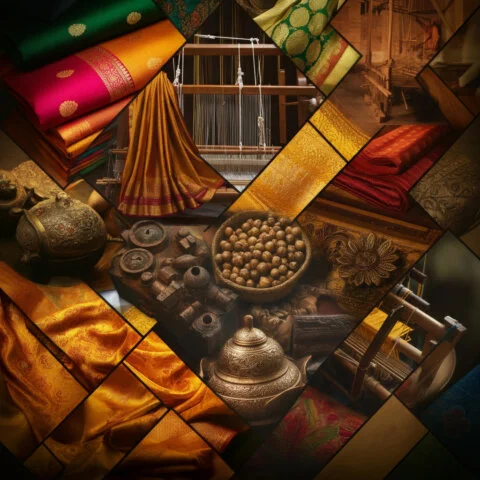
India sits at the heart of the global fabric trade, and its cities tell that story thread by thread. The country’s textile and apparel market is projected to reach US$350 billion by 2030, growing at a steady 10% CAGR. More than 45 million people earn their living from this sector, making it one of India’s largest sources of employment. So when buyers, sourcing managers, and curious enthusiasts search for the top 10 textile city in India, they are really asking where this enormous industry actually comes to life.
Each city on this list carries its own legacy, signature fabric, and manufacturing strength. From synthetic powerhouses to handloom heritage towns, these hubs form the backbone of India’s fabric economy. Let’s explore them one by one, because every name here adds a distinct chapter to the nation’s textile journey.
Why India’s Textile Cities Matter
Before we dive into the ranking, it helps to understand the bigger picture. India produces everything from raw cotton and jute to polyester, silk, and high-tech technical textiles. Roughly 70 industrial clusters account for about 80% of the country’s output, and most of them sit inside the cities you’ll read about below. Therefore, understanding the top 10 textile city in India is not just trivia. It’s a practical map for anyone sourcing fabric, planning a campaign, or studying market trends.
Moreover, government schemes like PM MITRA Parks and the Production-Linked Incentive program continue to pour investment into these clusters. As a result, these cities keep modernizing while holding on to their traditional craft. Now, let’s get into the details.
The Top 10 Textile City in India
1. Surat, Gujarat — The Synthetic Capital
Surat earns its spot as one of the oldest textile centers in the country. Often called India’s “Synthetic Capital,” the city handles nearly every stage of production, including spinning, weaving, dyeing, and embroidery. Surat produces a staggering volume of man-made fabric each day, and it supplies around 90% of the polyester used across India.
Its specialty lies in synthetic and blended materials, especially polyester sarees and dress fabrics. Because the city combines scale with speed, it remains a favorite for bulk buyers who need affordable man-made textiles fast.
2. Tiruppur, Tamil Nadu — The Knitwear Hub
Tiruppur, fondly known as “Knit City,” dominates India’s knitwear and hosiery exports. The city grew from a small cotton-trading town into a global apparel powerhouse, and today it ships t-shirts, innerwear, and casual knitwear to brands worldwide.
Its strength comes from a tightly connected ecosystem of dyeing units, knitting mills, and garment factories. Consequently, Tiruppur delivers cotton knitwear at competitive prices, which keeps it firmly among the top exporters in the Indian textile industry.
3. Mumbai, Maharashtra — The Fashion and Cotton Mill Legacy
Mumbai’s textile story began in 1856, when its first cotton mill opened its doors. The port, the climate, and easy access to raw materials helped the city become a cotton manufacturing giant. Although many historic mills have closed, Mumbai reinvented itself as India’s fashion capital.
Today, the city blends heritage cotton production with modern design, branding, and retail. In addition, Maharashtra continues to invest heavily in upscale textile parks with R&D centers and training hubs, which keeps Mumbai relevant in both manufacturing and fashion.
4. Panipat, Haryana — The Recycling and Home Textile Center
Panipat carries the nickname “Textile City of Haryana,” and for good reason. The city specializes in recycled textiles, blankets, rugs, and home furnishings. In fact, Panipat is widely recognized as a global hub for shoddy yarn and recycled fabric production.
Its focus on sustainability gives it a unique edge. Because the city turns textile waste into usable products, it appeals to brands chasing eco-friendly sourcing. Blankets, curtains, bed linen, and floor coverings all flow out of Panipat in huge quantities.
5. Ludhiana, Punjab — The Woolen Goods Powerhouse
Ludhiana, often called the “Manchester of India,” leads the country in woolen products and hosiery. The city produces sweaters, shawls, woolen garments, and knitted goods that warm households across the nation every winter.
Beyond wool, Ludhiana hosts a thriving hosiery and apparel industry supported by countless small and medium units. As a result, the city balances large-scale manufacturing with the flexibility of nimble workshops, which strengthens its contribution to the Indian textile industry.
6. Karur, Tamil Nadu — The Home Textile Export King
Karur proudly holds the title “Textile Capital of Tamil Nadu.” Since its rise in the 1970s, the city has become a leading exporter of home textiles such as bed linen, table linen, kitchen fabrics, and curtains.
Its producers hold international certifications and serve global retail giants. Furthermore, the Karur Textile Park accelerated the city’s growth, while supporting industries like spinning, ginning, and dyeing employ a huge local workforce. For home textile sourcing, Karur sits near the top of the list.
7. Bhilwara, Rajasthan — The Suiting and Polyester Hub
Bhilwara, known as the “Textile City of Rajasthan,” specializes in polyester fabric and premium suiting material. The town produces a remarkable share of India’s polyester-suiting fabric, which supplies tailors and apparel brands across the country.
Thanks to its integrated mills, Bhilwara handles spinning, weaving, and processing under one roof. Therefore, it offers buyers a reliable, vertically organized source for synthetic suiting fabrics at scale.
8. Jaipur, Rajasthan — The Home of Block Printing
Jaipur brings handcraft heritage to this list. The city and its surrounding towns, especially Sanganer and Bagru, are world-famous for traditional block printing. Sanganeri prints, Bagru prints, and Bandhani tie-dye all come from this colorful region.
These hand-printed cottons feature delicate floral motifs and natural dyes. Because the craft relies on skilled artisans, Jaipur supplies a niche but highly valued segment of the Indian textile industry, prized by designers and ethical fashion labels alike.
9. Varanasi, Uttar Pradesh — The Banarasi Silk Treasure
Varanasi is synonymous with luxury silk. The city’s legendary Banarasi sarees, woven with gold and silver zari work, have draped Indian brides for centuries. This handloom tradition stretches back generations and remains a symbol of cultural pride.
Banarasi silk carries a GI (Geographical Indication) tag, which protects its authenticity. Although production is intricate and time-consuming, the high value of each piece keeps Varanasi firmly among the most prestigious textile cities in the country.
10. Kolkata, West Bengal — The Jute and Cotton Center
Kolkata anchors Eastern India’s textile trade. The city built its reputation on jute, often called the “golden fiber,” along with a strong cotton industry. Jute from Kolkata becomes sarees, sacks, bags, decorative fabrics, and a wide range of household items.
A large pool of skilled, affordable labor supports the city’s textile workshops. In addition, Kolkata’s role as a commercial export center gives it a unique advantage. For sustainable, biodegradable fibers like jute, no city matches Kolkata’s depth of expertise.
Comparing the Top 10 Textile City in India
When you look at these cities together, a clear pattern emerges. Some hubs, like Surat and Bhilwara, focus on synthetic and man-made fabrics. Others, such as Tiruppur, Karur, and Ludhiana, dominate apparel, knitwear, and home textiles. Meanwhile, Jaipur, Varanasi, and Kolkata preserve traditional crafts that no machine can fully replicate.
This diversity is exactly why India ranks among the top five global textile exporters. Because each city specializes in something distinct, buyers can source almost any fabric type within the country’s borders. Whether you need bulk polyester or hand-woven silk, one of these cities can deliver.
How to Use This Guide for Sourcing
For sourcing managers and brands, this list works as a shortcut. First, identify the fabric type you need. Then, match it to the city that owns that specialty. For example, choose Tiruppur for cotton knitwear, Surat for synthetic sarees, or Varanasi for silk. This targeted approach saves time and connects you directly with the right cluster.
Additionally, many of these cities now sit inside government-backed textile parks, which means better infrastructure, plug-and-play units, and faster turnaround. So whether you run a small label or manage a large supply chain, these hubs offer scalable options.
Conclusion
India’s textile industry stands on the shoulders of cities like Surat, Tiruppur, Mumbai, Panipat, Ludhiana, Karur, Bhilwara, Jaipur, Varanasi, and Kolkata. Together, they power a sector that employs over 45 million people and races toward a US$350 billion market by 2030 at a healthy 10% CAGR. Each name on this list adds a unique strength, from synthetic scale to handloom heritage.
Understanding the top 10 textile city in India gives you a practical edge, whether you source fabric, study the market, or simply love the craft behind every weave. Ready to find your next fabric partner? Explore these cities, connect with verified suppliers, and bring your textile vision to life.
FAQ section:
Which city is the top 10 textile industry in India?
India’s top 10 textile industry cities are Surat, Tirupur, Ahmedabad, Ludhiana, Coimbatore, Mumbai, Panipat, Erode, Bhilwara, and Jaipur. These cities specialize in fabrics, garments, yarn, and home textiles, making them the backbone of India’s textile production, exports, and employment, driving significant economic growth nationwide.
Which is the textile city of India?
Surat, in Gujarat, is known as the “Textile City of India.” It is one of the largest centers for synthetic fabrics, sarees, and dress materials. The city’s thriving textile industry, advanced weaving units, and dyeing-printing facilities make it a major hub for India’s textile exports and fashion manufacturing.
Which is the textile capital city of India?
Coimbatore, in Tamil Nadu, is known as the “Textile Capital of India.” The city hosts thousands of textile mills, spinning units, and garment factories. With strong infrastructure, skilled labor, and proximity to cotton-growing regions, Coimbatore plays a vital role in India’s textile production, exports, and industrial development.
Which is the largest textile Centre in India?
Surat, in Gujarat, is the largest textile centre in India. It leads in synthetic fabric production, embroidery, and saree manufacturing. The city houses thousands of textile units and power looms, contributing significantly to India’s fabric exports, employment generation, and overall growth of the country’s textile and apparel industry.

Meena Ansari is the co-founder and business partner at M/s Tex Aux Chemicals. A passionate writer at heart, she brings a deep curiosity and love for learning to every aspect of the textile industry. With a keen interest in exploring innovations and sharing insights, Meena combines her entrepreneurial experience with a flair for storytelling to educate and inspire readers across the textile community.
- Meena Ansari
- Meena Ansari
- Meena Ansari
- Meena Ansari
- Meena Ansari
- Meena Ansari
- Meena Ansari
- Meena Ansari
- Meena Ansari
- Meena Ansari
- Meena Ansari
- Meena Ansari
- Meena Ansari
- Meena Ansari
- Meena Ansari