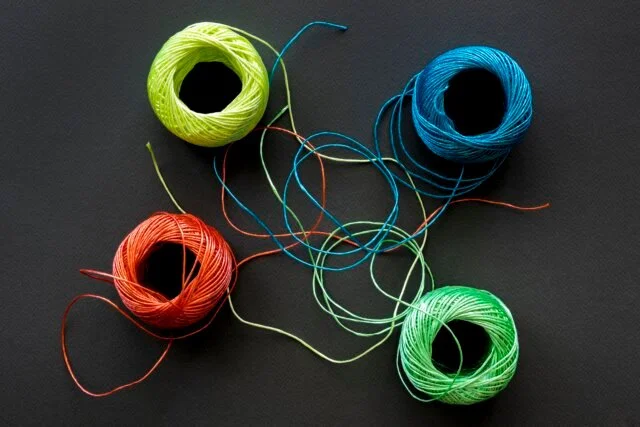
Nylon yarn powers some of the strongest, most versatile products in the modern textile industry. From parachutes and seatbelts to swimwear and carpets, this polyamide fiber shows up almost everywhere you look. Yet many buyers still struggle to understand the differences between nylon types, how the fiber is made, and which sustainable options actually deliver.
This guide clears up the confusion. Here’s what you’ll learn:
- What nylon yarn is and why it matters
- How Nylon 6 and Nylon 6,6 compare in properties, dyeing, and applications
- The manufacturing process from polymer to finished fiber
- Where nylon yarn delivers value across industries
- Which eco-friendly options and certifications to trust
Let’s start with the basics.
What Is Nylon Yarn?
Nylon yarn is a synthetic yarn spun from polyamide, a polymer first developed in the 1930s. Because it forms long, strong molecular chains, nylon delivers exceptional tensile strength, abrasion resistance, and elasticity. As a result, it became one of the first commercially successful synthetic fibers in history.
You’ll find nylon yarn in two main forms. Filament yarn consists of long, continuous strands, which create smooth, lustrous fabrics. Spun yarn, on the other hand, is made from shorter staple fibers twisted together for a softer, more textile-like feel. Both forms support knitting and weaving across countless applications.
Compared to natural fibers, nylon resists mildew, dries quickly, and holds its shape well. Therefore, manufacturers rely on it whenever durability and stretch matter most.
Nylon 6 vs Nylon 6,6 Yarn: Key Differences
Although both belong to the polyamide family, Nylon 6 and Nylon 6,6 behave quite differently. Understanding these distinctions helps you match the right fiber to your project.
Properties and Performance
The two polymers differ in molecular structure, and that shapes their physical behavior.
- Nylon 6: Lower melting point, higher water absorption, and excellent impact resistance. Consequently, it withstands stress and recovers well from deformation.
- Nylon 6,6: Higher melting point, lower water absorption, and stronger chemical resistance to acids. In addition, it offers greater stiffness, which suits demanding industrial uses.
In short, Nylon 6 favors resilience while Nylon 6,6 favors strength and heat tolerance.
Dyeing Behavior
Color performance often drives material choice. Nylon 6 dyes more easily and consistently, producing clearer, cleaner shades during acid dyeing. Nylon 6,6, however, proves more difficult to dye and can yield duller colors by comparison.
For projects that demand vibrant, repeatable color, many manufacturers choose solution-dyed nylon. Here, color chips are added before extrusion, which locks pigment into the fiber. As a result, the finished yarn shows brighter, more consistent color and superior fade resistance.
Typical Applications
Each type tends to claim its own territory:
- Nylon 6,6 dominates military and tactical webbing, especially where high heat resistance is required.
- Nylon 6 appears in most commercial textiles, including apparel, hosiery, and general-purpose webbing, partly because it costs less.
Bottom line: Choose Nylon 6,6 for extreme performance and Nylon 6 for cost-effective versatility.
How Nylon Yarn Is Made
The manufacturing process transforms raw polymer into usable yarn through several precise steps. Each stage influences the final strength, texture, and appearance of the fiber.
Step 1: Melt Spinning
First, manufacturers melt nylon polymer chips at high temperatures. Next, they force the molten polymer through a spinneret, a metal plate dotted with tiny holes. As the filaments emerge and cool, they solidify into continuous strands. This melt-spinning method defines how synthetic yarn production begins.
Step 2: Drawing
After spinning, the filaments are stretched, or “drawn.” This step aligns the molecular chains along the fiber’s length. Because alignment increases tensile strength and elasticity, drawing is essential for performance. Without it, the yarn would remain weak and prone to breaking.
Step 3: Texturizing
Finally, many filament yarns undergo texturizing. Here, heat and mechanical twisting add crimp, bulk, and stretch. Consequently, the yarn gains a softer hand and better insulation, which makes it ideal for apparel and upholstery.
Together, these three steps create yarn tuned for specific end uses. Adjusting any stage changes the fiber’s behavior, so producers fine-tune the process for each market.


Industrial and Fashion Applications
Nylon yarn earns its reputation through sheer versatility. Because it combines strength, elasticity, and low weight, it serves both heavy-duty industrial roles and high-fashion designs.
Industrial Applications
In demanding environments, nylon delivers reliability that natural fibers cannot match. Common industrial applications include:
- Webbing and straps for safety harnesses, seatbelts, and cargo restraints
- Ropes and nets that resist water, abrasion, and UV exposure
- Tire cords and conveyor belts that handle constant mechanical stress
- Carpets and flooring that withstand heavy foot traffic
Because these uses demand consistent performance, manufacturers often specify Nylon 6,6 for its superior strength and heat resistance.
Fashion and Apparel
Meanwhile, the fashion world values nylon for comfort and stretch. Designers rely on it for:
- Swimwear and activewear, where quick-drying performance matters
- Hosiery and lingerie, where lightweight smoothness shines
- Outerwear, where durability meets weather resistance
Through both knitting and weaving, nylon yarn adapts to nearly any garment. Therefore, it remains a staple across sportswear and everyday fashion alike.
Sustainability in Nylon Yarn
Traditional nylon carries an environmental cost. Production relies on non-renewable petroleum, consumes significant energy and water, and contributes to microplastic pollution. Alarmingly, only a small fraction of polyamide fiber gets recycled each year. Fortunately, the textile industry now offers cleaner alternatives.
Recycled Nylon
Recycled nylon transforms waste into valuable fiber. Manufacturers source it from pre-consumer factory scraps and post-consumer materials like old carpets and discarded fishing nets. Because production uses far less oil, water, and energy than virgin fiber, the carbon savings can reach up to 50%.
ECONYL, produced by Aquafil, leads this space. Made from recovered ocean and landfill waste, it offers the same durability as standard nylon while cutting emissions. Other notable options include REPREVE by Unifi and Q-NOVA by Fulgar. However, recycled yarn often costs more, since processing requires careful separation from virgin fibers.
Bio-Based Nylon
Bio-based nylon swaps petroleum for renewable feedstocks like castor beans, corn, and sugar. Although this niche still represents a small market share, it continues to grow as brands chase lower carbon footprints.
Innovators such as Fulgar’s Sorona and Toray’s EcoDear show what’s possible. That said, some bio-based options rely on industrial food crops, which can demand large amounts of land. Therefore, sourcing from non-food crops or food waste usually delivers the greener result.
Biodegradable Nylon
Biodegradable polyamide offers another promising path. Unlike standard nylon, which can persist for centuries, these fibers break down far faster under the right conditions.
Amni Soul Eco, a biodegradable Nylon 6,6 from Fulgar, decomposes in anaerobic landfills up to five times faster than conventional fibers. It also stays recyclable and reusable. Brands across swimwear and lingerie have already adopted it.
Certifications to Trust
Claims mean little without proof. Reliable certifications help you verify sustainable sourcing:
- GRS (Global Recycled Standard) and RCS (Recycled Claim Standard) confirm recycled content and chain of custody.
- Oeko-Tex Standard 100 verifies the yarn is free from harmful substances.
- USDA BioPreferred validates renewable bio-based content.
When you specify these standards, you protect your brand and meet rising consumer demand for transparency.
Choosing the Right Nylon Yarn
The best choice always depends on your end use. For heavy industrial demands, Nylon 6,6 offers unmatched strength and heat resistance. For cost-effective apparel and easy dyeing, Nylon 6 makes more sense. And when sustainability drives your decision, recycled or biodegradable options now deliver quality without the guilt.
Before you commit, weigh three factors: performance needs, color requirements, and environmental goals. Then match the fiber, the manufacturing method, and the certification to those priorities.
Conclusion
Nylon yarn remains one of the most adaptable materials in the textile industry, balancing strength, stretch, and versatility across countless products. By understanding the differences between Nylon 6 and Nylon 6,6, the manufacturing process, and the growing range of sustainable options, you can specify the right fiber with confidence.
Your next step is simple: define your project’s priorities, then source nylon yarn that matches them. Explore verified suppliers on textilelisting.com to find the perfect fit today.
FAQ's
What is nylon yarn used for?
Nylon yarn is used in apparel, home textiles, and industrial products. Common applications include sportswear, hosiery, carpets, upholstery, ropes, tire cords, and industrial sewing threads due to its high strength, elasticity, and abrasion resistance.
Is nylon yarn stronger than polyester yarn?
Yes, nylon yarn is generally stronger and more abrasion-resistant than polyester yarn. It also offers better elasticity and impact resistance. However, polyester yarn performs better in UV resistance and moisture repellency.
Is nylon yarn suitable for summer clothing?
Nylon yarn can be used for summer clothing when engineered into lightweight or moisture-managed fabrics. While it absorbs some moisture, it dries quickly and is commonly used in activewear and sports garments designed for warm conditions.
Is nylon yarn stretchable?
Yes, nylon yarn has excellent stretch and recovery properties. This makes it ideal for products such as hosiery, swimwear, leggings, and performance apparel where flexibility and shape retention are important.

Meena Ansari is the co-founder and business partner at M/s Tex Aux Chemicals. A passionate writer at heart, she brings a deep curiosity and love for learning to every aspect of the textile industry. With a keen interest in exploring innovations and sharing insights, Meena combines her entrepreneurial experience with a flair for storytelling to educate and inspire readers across the textile community.
- Meena Ansari
- Meena Ansari
- Meena Ansari
- Meena Ansari
- Meena Ansari
- Meena Ansari
- Meena Ansari
- Meena Ansari
- Meena Ansari
- Meena Ansari
- Meena Ansari
- Meena Ansari
- Meena Ansari
- Meena Ansari
- Meena Ansari