jute
Jute fiber is a long, soft, and shiny plant-based fiber known for its strength, durability, and eco-friendly qualities. Extracted from the bark of the jute plant, primarily grown in India and Bangladesh, it is one of the most affordable and sustainable natural fibers available. Often referred to as the “golden fiber” due to its silky golden hue, jute is 100% biodegradable and recyclable, making it an ideal choice for environmentally conscious applications.
This versatile fiber is widely used in the production of sacks, bags, ropes, mats, and rugs, as well as home décor items like curtains and cushion covers. It blends well with other fibers and can also be used to make textiles and fashion accessories. With good breathability and insulation properties, jute is suitable for both functional and decorative purposes.
Jute cultivation has a low environmental impact, requiring minimal pesticides and fertilizers, and it helps improve soil health. As the demand for sustainable materials continues to grow, jute is gaining popularity in industries seeking greener alternatives.
Whether used in agriculture, packaging, or interior design, jute fiber offers a perfect balance of strength, sustainability, and natural beauty—making it a valuable resource in today’s eco-conscious world.
jute
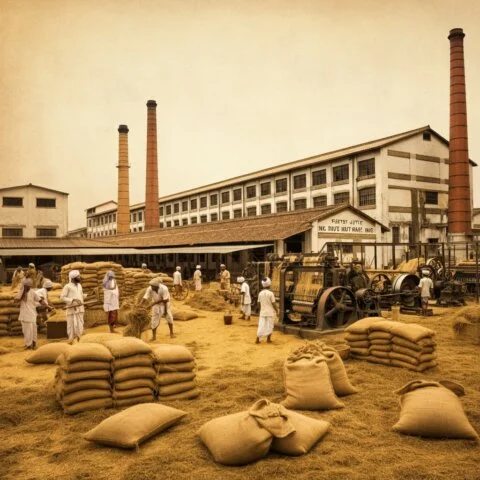
The story of India’s industrial growth is woven with many threads, but few are as significant as the coarse, golden fiber of jute. While jute had been cultivated and used in the Indian subcontinent for centuries, its transformation from a local handicraft material into a global industrial powerhouse began with a single, pivotal event: the […]
jute
Jute, a long, soft, and shiny plant fiber, has earned the illustrious nickname “the Golden Fibre.” This title isn’t just a poetic flourish; it speaks to the fiber’s immense value, appearance, and impact on economies worldwide. Its shimmering, golden-brown hue is the most apparent reason, but its true worth lies much deeper. Jute’s story is
jute
As the world shifts towards sustainable alternatives, jute fiber is emerging as one of the most promising natural fibers. Commonly referred to as the “golden fiber” due to its silky sheen and golden hue, jute is gaining popularity not only for its traditional applications but also for its environmental benefits and versatility in modern industries.
jute
Jute is one of the most versatile and eco-friendly natural fibers available today. Often referred to as the “golden fiber” due to its natural shine and economic importance, jute is used in everything from packaging and upholstery to bags, rugs, and even eco-fashion. But have you ever wondered how jute fiber is made? In this
jute
In the age of sustainability, natural fibers have become the preferred choice for consumers and manufacturers alike. From clothing to home décor and packaging, materials like cotton, hemp, flax, coir, and jute are being used more than ever. But what sets jute apart from these other natural fibers? In this article, we’ll explore the distinctive
jute
In the world of sustainable materials, jute fiber stands out as a versatile and eco-friendly option. Known as the “golden fiber” due to its silky shine and golden color, jute is a long, soft, and shiny bast fiber that can be spun into coarse, strong threads. Its popularity has surged in recent years, especially among