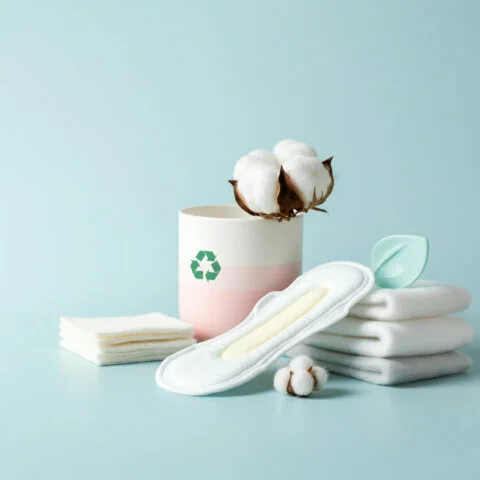
Building a great pad starts long before the machine hums to life! Every high-quality product begins with the right sanitary pad raw material, chosen layer by layer for absorbency, comfort, and reliable leak protection. If you source materials for hygiene product manufacturing, you already know that one weak component can undermine an entire production run.
So, what goes into a modern sanitary napkin, and how do you pick the right specs? This guide walks you through each layer, explains the technical numbers that matter, and shares practical sourcing tips built for B2B buyers.
Here’s what you’ll get:
- A layer-by-layer breakdown of every core material
- Key GSM ranges and technical specs to request from suppliers
- Quality standards and certifications that protect your brand
- Sourcing advice and a quick FAQ for fast decisions
Let’s dig in!
Understanding the Layered Structure of a Sanitary Napkin
A sanitary pad looks simple, yet it’s a precisely engineered stack. Each layer does one job, and together they deliver dryness and comfort. Because every material interacts with the next, your specs must work as a system, not as isolated parts.
Here are the essential components you’ll source for sanitary napkin manufacturing:
- Top sheet — hydrophilic non-woven fabric
- ADL — acquisition distribution layer
- Absorbent core — super absorbent polymer (SAP) plus fluff pulp
- Backsheet — PE film or breathable film
- Hot melt adhesive — bonds layers and secures the pad
- Release paper — protects the adhesive until use
Now, let’s explore each one in detail.
Top Sheet: Hydrophilic Non-Woven Fabric
The top sheet touches the skin directly, so softness matters enormously. Manufacturers typically choose hydrophilic non-woven fabric for sanitary pads because it pulls fluid downward quickly, keeping the surface dry and comfortable.
Most top sheets fall within a 25–50 GSM range. Lighter weights feel silky but can risk pilling; heavier weights add durability. Spunbond and spunlace options are both common, and the right pick depends on your target market tier.
Quick tip: Don’t chase the lowest GSM to save money. A 15 GSM sheet may look cheaper, yet it often causes rewet failures and rough texture that customers notice instantly.
ADL: The Acquisition Distribution Layer
Just beneath the top sheet sits the ADL, or acquisition distribution layer. This layer grabs fluid fast and spreads it laterally, so the absorbent core works evenly instead of saturating in one spot.
An effective ADL prevents that uncomfortable pooling sensation. Typically, it uses through-air bonded non-woven at around 40–80 GSM, often made from polyester or bicomponent fibers.
Because the ADL manages flow speed, it directly affects rewet performance. Therefore, buyers who skip it usually see weaker results during heavy-flow testing.
Absorbent Core: SAP and Fluff Pulp
Here’s the heart of the pad! The absorbent core materials do the heavy lifting, and they combine two powerful ingredients.
Super Absorbent Polymer (SAP)
Super absorbent polymer (SAP) is a game-changer for the hygiene industry. This sodium polyacrylate material can absorb many times its own weight in liquid, then lock it into a gel so it won’t leak back out.
When you specify SAP, focus on:
- Absorption capacity (grams of fluid per gram of SAP)
- Retention under load, which measures how well the gel holds fluid under pressure
- Particle size, since consistency affects distribution
Fluff Pulp
Fluff pulp, usually derived from wood pulp, gives the core its structure and bulk. Moreover, it distributes fluid so the SAP can work efficiently. Together, fluff pulp and SAP form a balanced system: the pulp channels liquid, and the polymer locks it away.
For 1,000 regular pads, you’ll often use roughly 3–5 kg of SAP and around 4 kg of fluff pulp, though this varies by pad size and design.
Backsheet: PE Film or Breathable Film
The backsheet is your leak barrier, and it sits at the very bottom of the pad. A standard PE film backsheet uses polyethylene at roughly 18–25 GSM to keep fluid from reaching clothing.
Increasingly, brands prefer breathable film instead. These backsheets let air and moisture vapor escape while still blocking liquid, which reduces humidity and boosts comfort.
Do this: Request burst strength data (aim for around 1.5 kgf/cm²) so your backsheet won’t fail under pressure during real-world use.
Hot Melt Adhesive and Release Paper
Two smaller components keep everything together and in place.
- Hot melt adhesive bonds the internal layers and creates the sticky strip that anchors the pad to underwear. It should be skin-friendly and stable across temperature changes. Poor adhesive quality shows up fast as shifting pads and unhappy customers.
- Release paper covers that adhesive strip until the user peels it off. A well-coated, silicone-treated release paper peels cleanly and never lifts prematurely.
Although these parts seem minor, they influence the entire user experience. Consequently, skipping release-paper coating tests is a common and costly mistake.
Quality Standards Every Manufacturer Should Check
Strong quality control turns good hygiene product raw materials into a brand customers trust. For institutional tenders, exports, and modern retail listings, certifications aren’t optional—they’re gatekeepers.
Watch for these standards:
- OEKO-TEX Standard 100 — confirms fabrics are free from harmful substances and safe for skin contact
- ISO 9001 — verifies a supplier follows a consistent quality management system
- IS 5405 — the Indian standard specifically for sanitary napkins
For heavier scrutiny, export-focused producers may also pursue ISO 13485 for medical-grade quality systems. Additionally, always request a Certificate of Analysis (CoA) covering GSM tolerance, absorption capacity, retention under load, and skin compatibility.
Test parameters to prioritize:
- Absorption rate (target ≥ 10x own weight for the SAP-plus-pulp core)
- Rewet value (ideally ≤ 0.3 g under load)
- pH neutrality of the top sheet
- Backsheet burst strength
Sourcing Considerations for B2B Buyers
Choosing the right supplier is just as important as choosing the right specs! A dependable partner keeps your line running and your margins healthy.
Here’s what smart buyers weigh:
- Material quality: Confirm every batch meets your documented specifications, backed by CoA paperwork.
- Supply reliability: Partner with suppliers who deliver consistent quantities on predictable lead times.
- Cost-effectiveness: Balance price with performance. A tiny per-pad saving vanishes fast if it triggers returns.
- Minimum order quantities: Match MOQ to your production scale so you don’t overstock slow-moving specialty grades.
- Technical support: The best suppliers help you fine-tune specs before you commit to a large run.
A helpful strategy involves mixing sources. Many manufacturers source high-volume non-woven top sheets, ADL, and PE backsheet locally for short lead times, while importing specialty SAP grades where domestic capacity is limited. This approach protects supply continuity and cushions you against price swings.
Avoid this: Locking in specs on price alone. Instead, ask for samples, run absorption and rewet tests, and validate performance before scaling.
Final Takeaways
Great pads start with great materials! When you understand each layer—from the soft top sheet and ADL down to the SAP core, fluff pulp, backsheet, adhesive, and release paper—you can specify with confidence and avoid costly surprises.
Keep these next steps handy:
- Specify by performance, not price alone.
- Request CoA documentation and run absorption and rewet tests.
- Verify certifications like OEKO-TEX, ISO 9001, and IS 5405.
- Build a resilient sourcing mix to protect supply and margins.
With the right sanitary pad raw material choices, you’ll produce hygiene products that perform beautifully and keep buyers coming back.
Frequently asked questions [FAQs]
1. What are the raw materials used in sanitary pad manufacturing?
Sanitary pads are made from materials like non-woven fabric (top sheet), wood pulp and super absorbent polymers (core), polyethylene film (back sheet), and adhesives.
2. What is the absorbent material in sanitary pads?
The absorbent core typically contains fluff pulp (cellulose) and super absorbent polymer (SAP), which work together to soak up and lock in menstrual fluid.
3. Is cotton used in sanitary pads?
Some sanitary pads use organic or natural cotton in the top sheet or absorbent core, especially eco-friendly or biodegradable varieties.
4. Are sanitary pads made of plastic?
Yes, conventional pads contain plastic components like the polyethylene back sheet and synthetic fibers in the top layer, which help with waterproofing and comfort.
5. What is SAP in sanitary pads?
SAP stands for Super Absorbent Polymer, a material that absorbs and retains large amounts of liquid by turning it into a gel, preventing leaks and discomfort.

Meena Ansari is the co-founder and business partner at M/s Tex Aux Chemicals. A passionate writer at heart, she brings a deep curiosity and love for learning to every aspect of the textile industry. With a keen interest in exploring innovations and sharing insights, Meena combines her entrepreneurial experience with a flair for storytelling to educate and inspire readers across the textile community.
- Meena Ansari
- Meena Ansari
- Meena Ansari
- Meena Ansari
- Meena Ansari
- Meena Ansari
- Meena Ansari
- Meena Ansari
- Meena Ansari
- Meena Ansari
- Meena Ansari
- Meena Ansari
- Meena Ansari
- Meena Ansari
- Meena Ansari